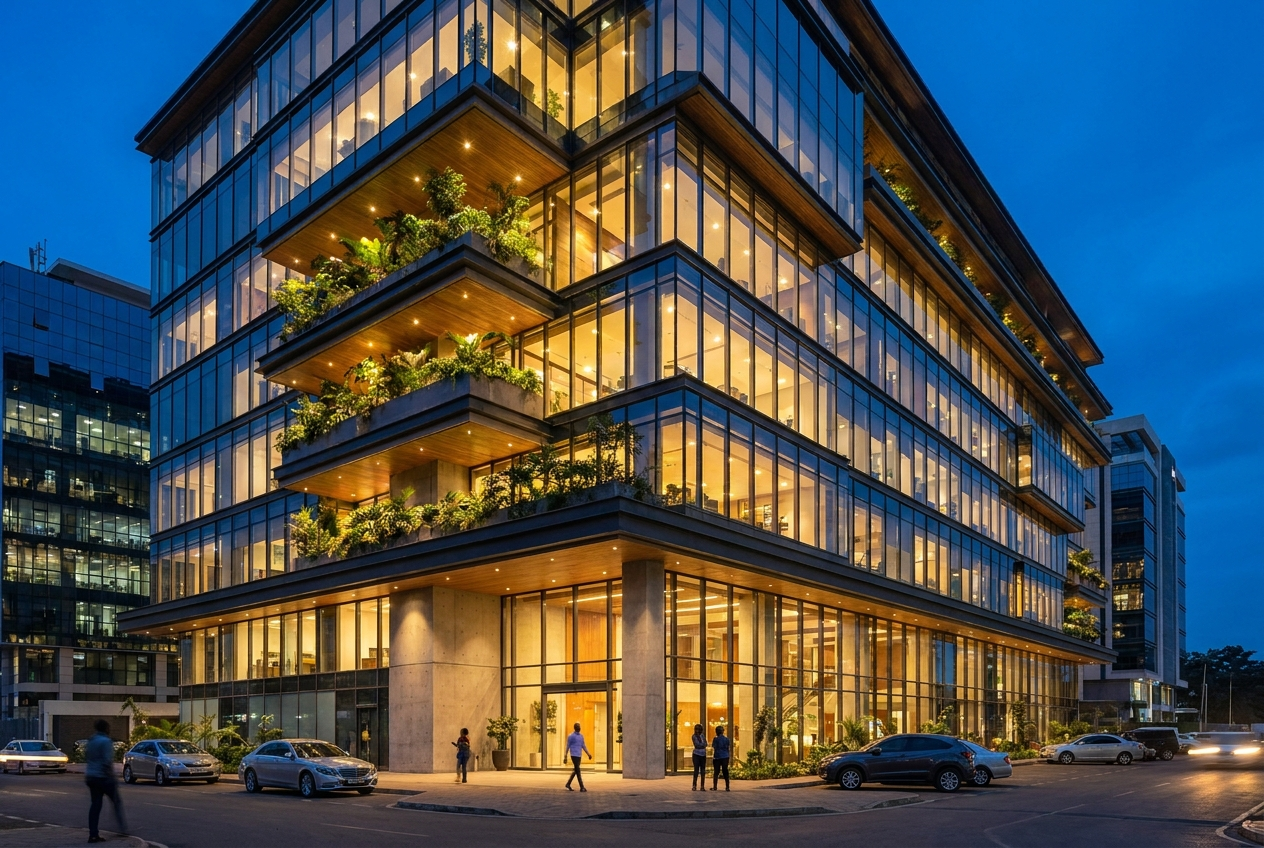
Westlands Hub
An evolution of commercial density in Nairobi.
Rethinking Urban Density
The Westlands district of Nairobi is undergoing a radical transformation. As the area densifies, the traditional office model — closed, air-conditioned boxes — is becoming increasingly unsustainable and disconnected from Kenya's climate.
The client required 12,000 square metres of grade-A office space that prioritises the mental and physical health of its occupants through light, air, and greenery — a building that could stand as evidence that density and liveability are not in conflict.
Project Metadata
Density & Daylight
The primary architectural challenge was geometric: how to achieve the required floor area ratio on a compact 0.4-acre site without creating dark, deep-plan workspaces. Standard development patterns in Westlands often result in "dead zones" — areas where workstations are entirely dependent on artificial light and recycled air.
Furthermore, the tropical sun in Nairobi presents a significant cooling load. The design had to balance the desire for large glass facades with the necessity of solar shading to keep operational energy costs low for the investors.
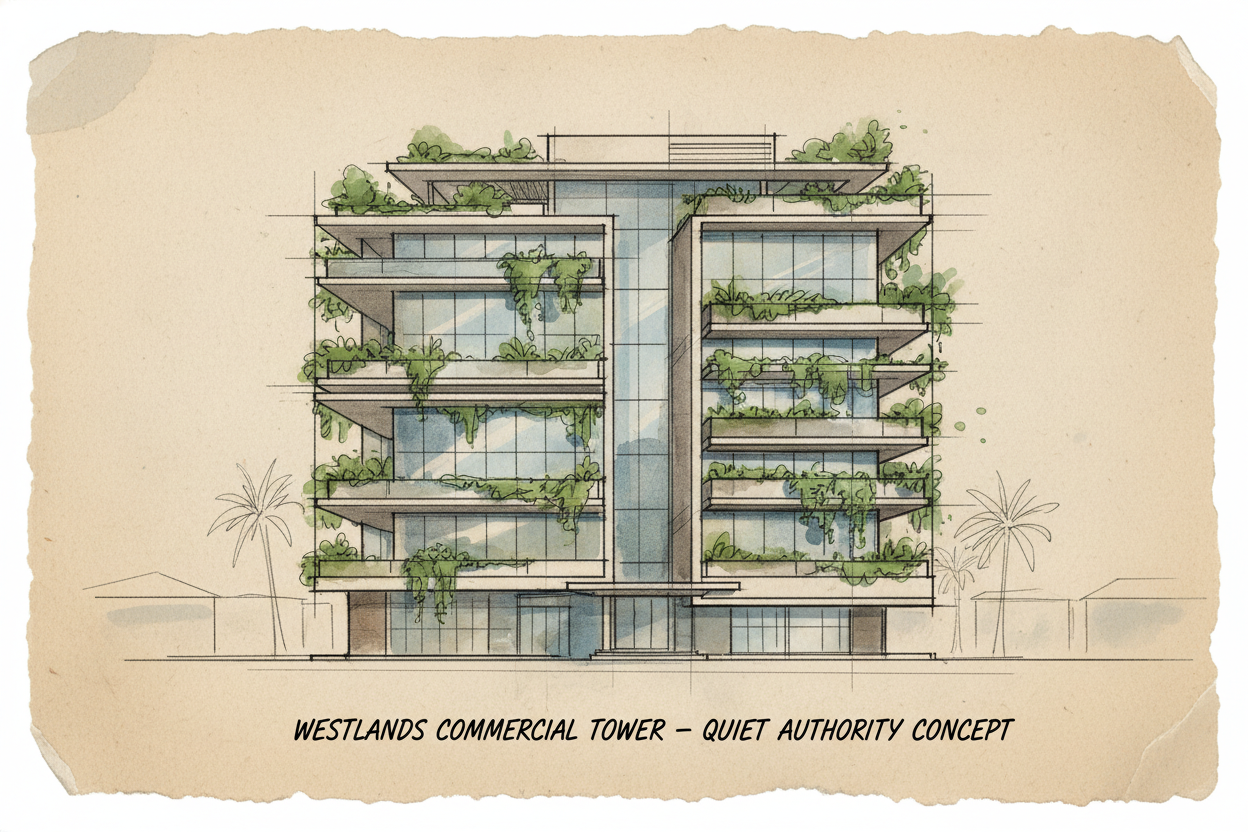
Early Concept Sketch — The Vertical Lung
The Vertical Lung
I conceived the building as a living organism. Instead of a solid block, I carved a massive central atrium — the "Vertical Lung" — that runs from the ground floor to the roof. This void serves a dual purpose: it pulls natural light deep into the building core and acts as a stack-effect ventilator, drawing cool air in from the base and exhausting heat at the summit.
Biophilic Facade
Integrating continuous planting troughs on every floor level. These act as natural solar filters, diffusing harsh sunlight before it hits the glass, while simultaneously improving air quality for occupants.
15-metre Daylight Rule
A commitment to a maximum 15-metre distance from any workstation to a source of natural light. Achieved by fragmenting the building mass and introducing secondary internal lightwells alongside the central atrium.
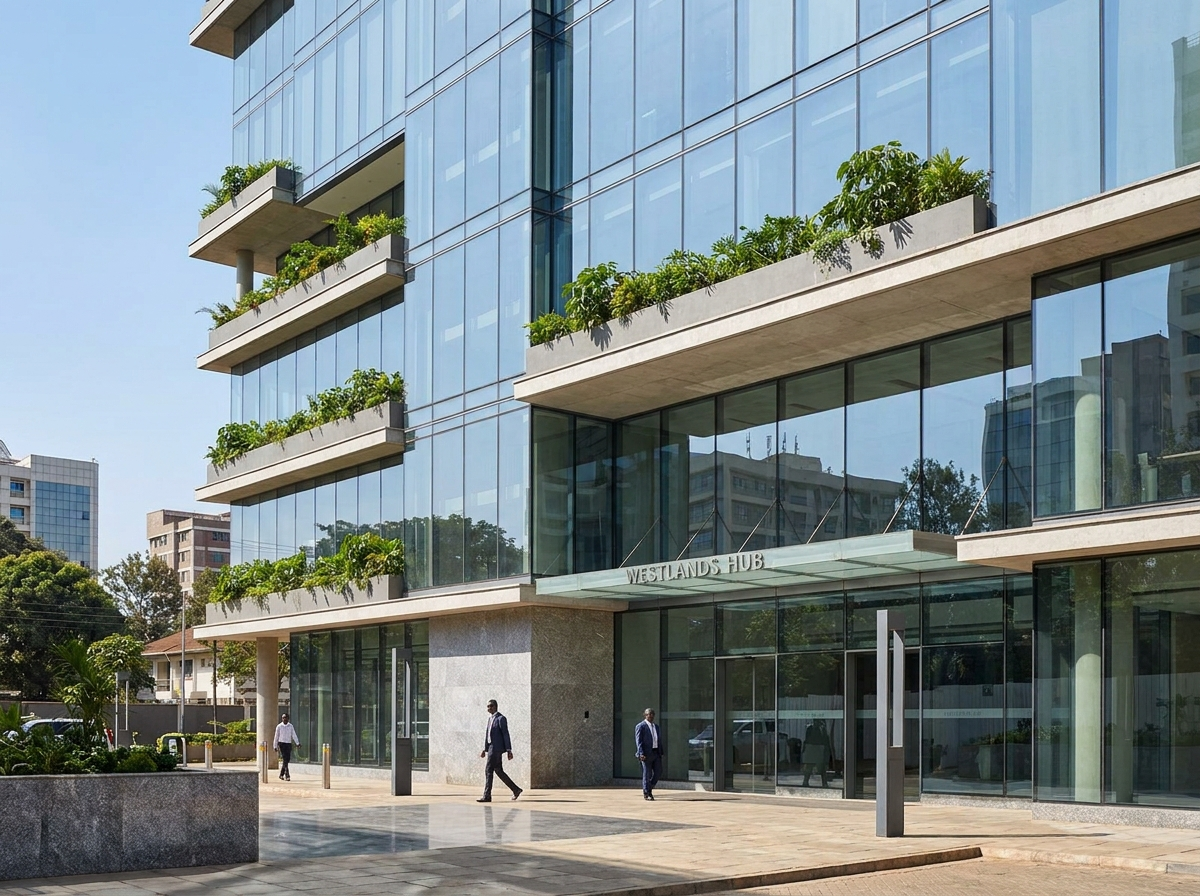
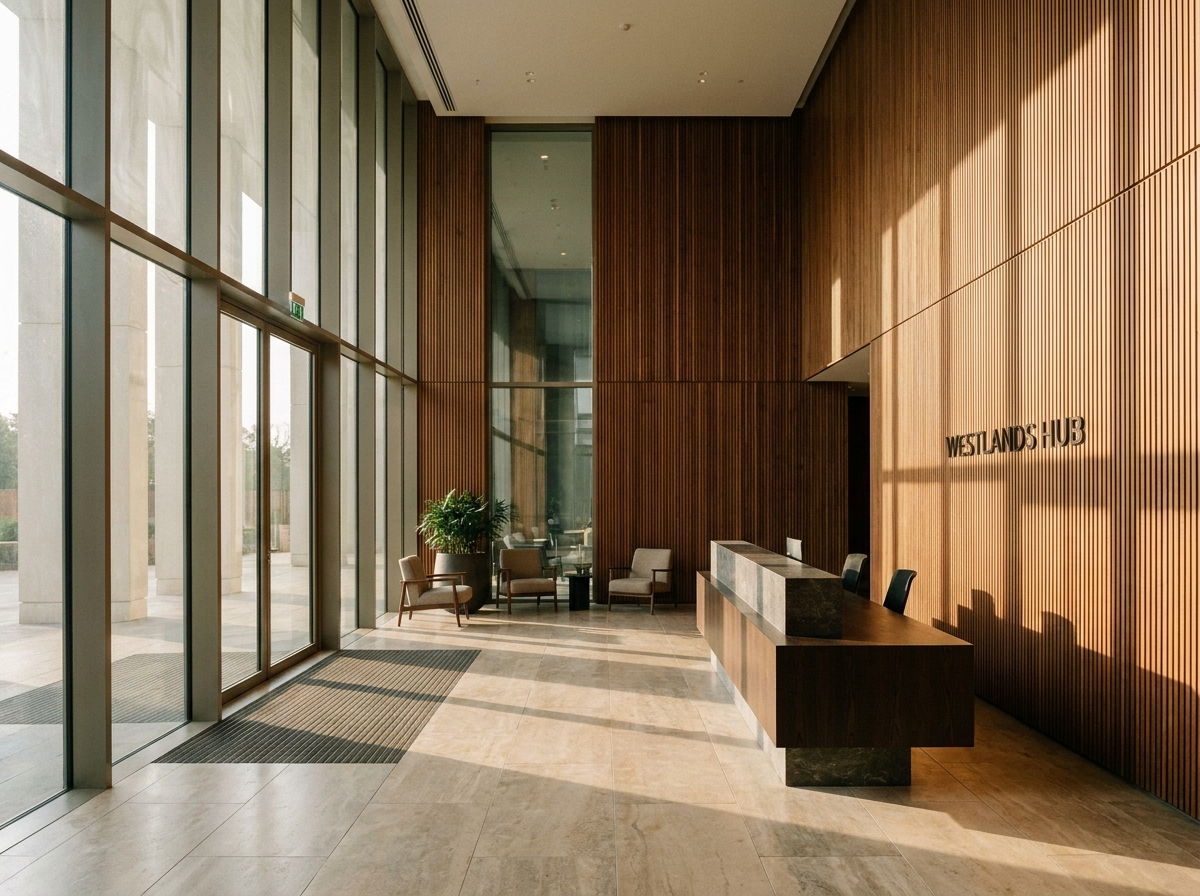
"A commercial workspace that prioritises human well-being over efficiency metrics — the building reduced projected HVAC costs by 32%."