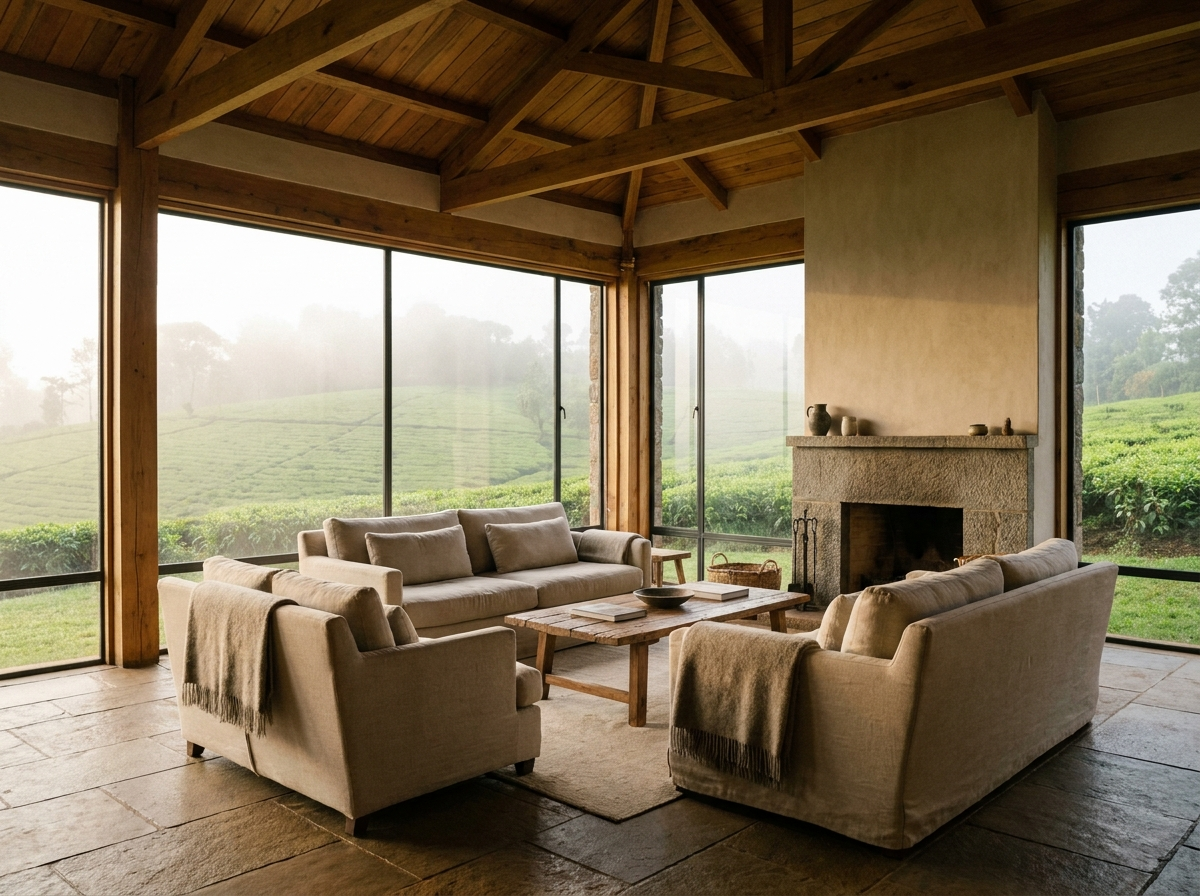
Tigoni Bungalow
Tigoni, Limuru
The Brief
Perched on the edge of a verdant ridge above the tea estates of Tigoni, this bungalow was designed for a writer seeking respite from Nairobi. The project required a delicate balance: a warm, protected interior that maintains an uninhibited connection to the ethereal landscape outside — the mist, the rolling hills, the slow light that defines Limuru mornings.
| Site Area | 1.2 Acres |
|---|---|
| Built Area | 280 sqm |
| Year | 2024 |
| Scope | Full Architectural Service |
The Constraint
Building with the Mist
Tigoni's climate is cool and damp year-round — high humidity, frequent fog, cold nights. The standard response to this is to seal the building and rely on mechanical heating. That approach would have killed the connection to the landscape that the brief demanded. The design had to achieve thermal comfort using the building's own mass, without letting the structure feel heavy or bunker-like to the person living inside it.
The Concept
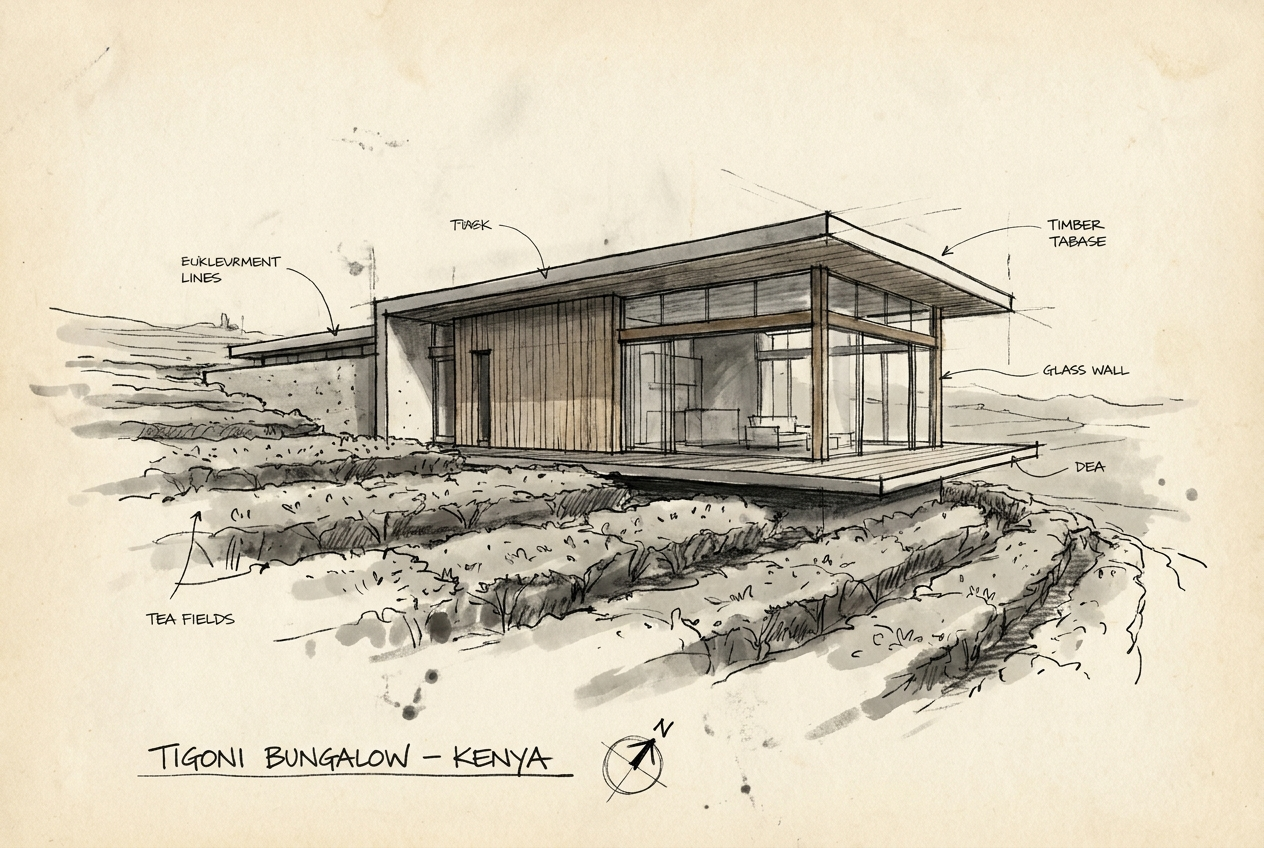
Concept Sketch — The Floating Terrace
The 'Floating Terrace' concept lifts the primary floor plate above the sloping site, hovering over the tea bushes rather than cutting into the hillside. By raising the building, we minimised the physical footprint on the land and preserved the site's natural drainage — while positioning the inhabitant at eye-level with the ridge line and the rolling hills beyond.
Key Decisions
The structural spines of the building are hand-cut local stone — thick masonry walls on the north and west faces. They absorb the equatorial sun's warmth during the day and radiate it back into the living spaces through the cold Limuru nights. No mechanical heating system was installed.
Instead of window punch-outs, the entire eastern facade is a single high-performance glazed aperture. The glass dissolves the boundary between the interior and the plantation — the tea fields become the fourth wall of the living room. The writer's desk faces east.
Living Room — East Elevation, Morning Light
Original Concept Drawing
"A sanctuary that disappears into the mist — designed for silence and the slow passage of time. No mechanical heating was needed."
Have a project in mind?
Start a conversation →