Building in Kenya from Abroad
A guide to navigating the Kenyan construction landscape with transparency and trust.
Bridging the Trust Gap
Every year, the Kenyan diaspora sends over $5 billion home. A significant portion of these remittances is earmarked for investment in the built environment — residential homes, commercial units, and ancestral estates. Yet, for many, the dream of "building back home" is shadowed by a persistent and painful reality.
Recent data indicates that 61% of diaspora investors cite lack of trust as the primary barrier to property development. The "trust gap" isn't just about dishonest contractors; it's about the lack of visibility into a process happening 5,000 miles away.
At Vision Sketch & Build, we believe architecture shouldn't be an ivory tower. It should be a trust machine. This guide is designed to demystify the professional landscape and arm you with the knowledge to protect your investment.
The Five Pillars of Remote Building
Legality & Credentials
Before signing any contract, verify that your architect is registered with the Board of Registration of Architects and Quantity Surveyors (BORAQS) and is a member of the Architectural Association of Kenya (AAK). A registered professional is legally liable for the structural integrity of your build; an unregistered "draftsman" is not.
The Title Deed
Due diligence starts at the ground. Do not lay a single stone until your architect or lawyer has performed a physical search at the Land Registry. We ensure the land is not only legally yours but also suitable for the specific density and zoning requirements of its location.
Design Legibility
Many diaspora clients receive "blueprints" they don't fully understand. Demand legibility. We move from flat drawings to 3D process visualisations that you can navigate from your phone. If you can't "walk through" the building virtually, you shouldn't be paying for it physically.
Site Supervision
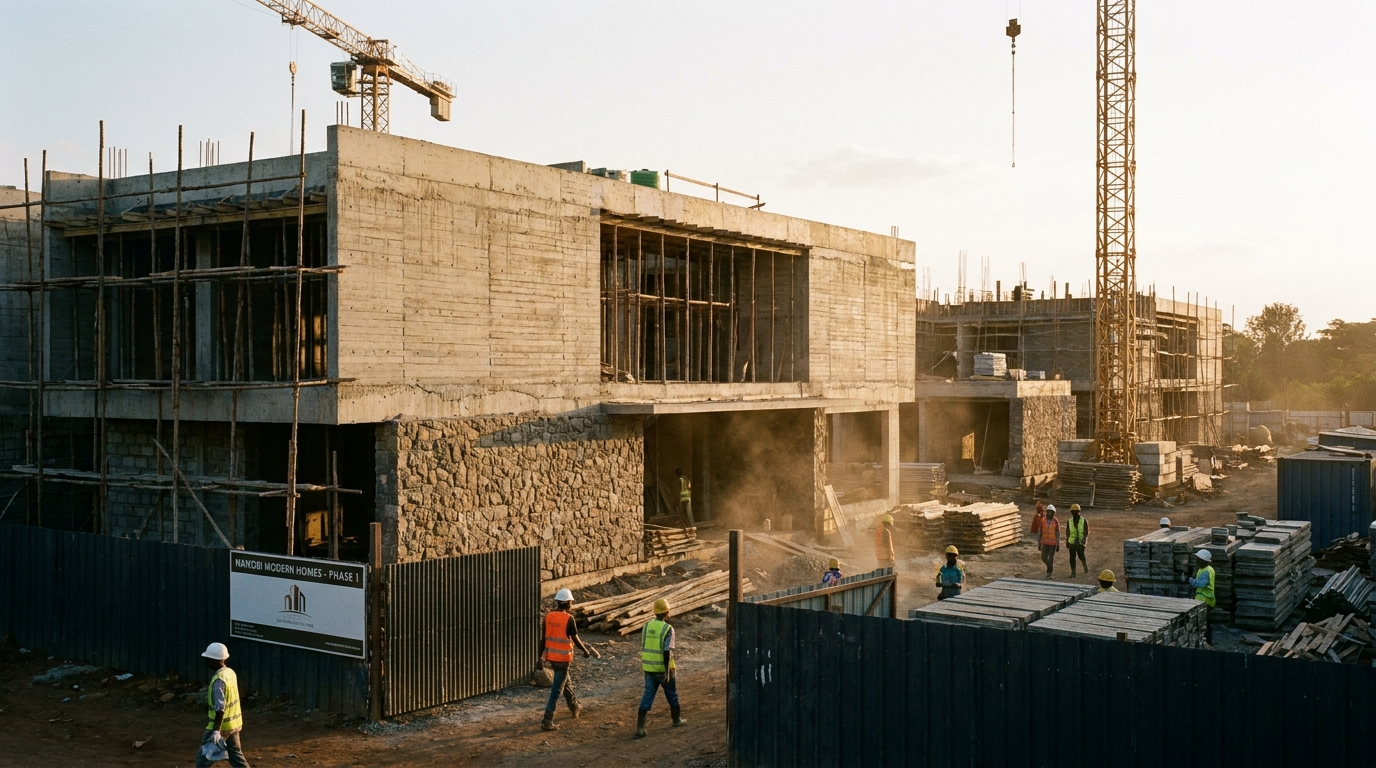
Your architect is your eyes on the ground. A professional engagement includes regular site visits and detailed progress reports. Remote building fails when the architect's involvement ends at the design stage. We act as your project manager, ensuring the stone on-site matches the stone in the specification.
Fee Transparency
Beware of "discounts" that seem too good to be true. BORAQS mandates a scale of fees (typically 6% for standard residential projects). Professionals charging significantly less often cut corners on site supervision or lack the overhead to provide proper accountability. Understanding the mandated minimums is your first layer of protection against fraud.
The Diaspora Checklist: 5 Questions for your Architect
- "Can you provide your current BORAQS practising certificate number?"
- "What software do you use for remote project visualisation and reporting?"
- "Will you be handling the liaison with the county government for approvals?"
- "How many site supervision visits are included in your standard contract?"
- "Do you provide a transparent Bill of Quantities (BQ) from a registered Quantity Surveyor?"
Ready to build with transparency?
We specialise in helping diaspora Kenyans navigate the complexities of home-grown construction through professional design and radical honesty.
Start a conversation on WhatsApp